
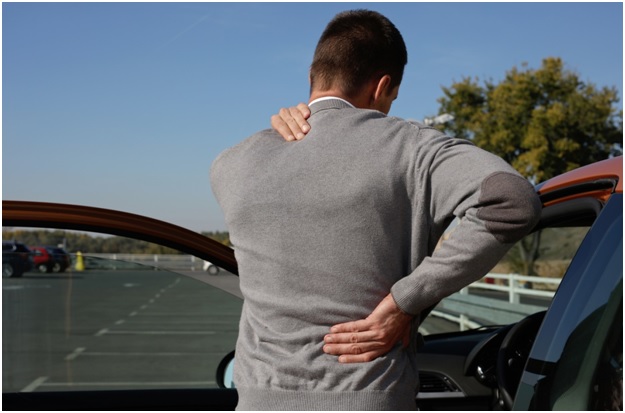
You can suffer a back injury from many different activities. Your back can be injured because of improper lifting, failing to exercise, and other similar things. Some people suffer back injuries and pain as a part of the aging process because of degeneration of the spine or arthritis in the joints.
One of the most common causes of back injuries is a motor vehicle accident. Car crashes can result in back injuries because of the force that might be placed on the spine and back, violent twisting and turning, or trauma to the back.
According to Steven M. Sweat, a personal injury attorney, “back pain is the number one form of bodily injury following an auto accident.” This is especially true of pain in the cervical spine located in the neck or in the lumbar region located in the lower back. Here is some information about the causes of back pain from an auto accident and when you might want to see a doctor.
Anatomy of the Vertebral Column
Your spine is comprised of the spinal cord, which is a bundle of nerves extending from your lower back up to your skull, and a column of 33 vertebrae and tissues. The column of vertebrae encircles your spinal cord to protect it. Each vertebra is separated from the next by an intervertebral disk made out of cartilage. Your disks function as shock absorbers between your vertebrae and provide your back with the ability to comfortably move. Peripheral nerves enter your spinal column and connect with your spinal cord through openings between your vertebrae.
The vertebral column is divided into the following regions:
- Cervical vertebrae – Include the seven vertebrae in the upper region of your spine in the neck
- Thoracic vertebrae – Include 12 vertebrae in the middle back extending from the neck and lower back
- Lumbar vertebrae – Include five large, strong vertebrae in the lower back
- Sacrum – Five fused vertebrae that are fused together
- Coccyx – Four fused vertebrae at the base of the spine called the tailbone
You can suffer injuries to any of the bones in these different areas of your vertebral column. The symptoms you might experience will depend on the severity of the injury and its location on your spine.
What Are the Causes of Back Pain Following a Car Wreck?
When you are involved in a car wreck, a significant amount of force can be exerted on your back and spine. In high-impact collisions, back injuries commonly occur. Below are a few of the most common types of back injuries in a car crash that can cause you to experience back pain.
Whiplash
Whiplash is a very common type of injury people experience in car crashes. It is especially common in rear-end collisions. Whiplash occurs when the force of a collision causes your head and neck to be thrown violently forward and then propel back as the collision forces subside. When your head and neck move back, they can hyperextend. Whiplash injuries frequently involve tearing and damage to the ligaments, nerves, tendons, muscles, vertebrae, and discs in the cervical region of the spine. If you experience whiplash, you might have limited mobility in your neck and experience pain in your neck, shoulders, and upper back. The symptoms of whiplash can have a delayed onset, so you might not notice your symptoms for several hours or days after a collision.
Strains and Sprains
In a collision, the impact can also cause your ligaments, tendons, and muscles in your lumbar spine to stretch or tear and cause strains and sprains. These types of injuries normally cause acute pain in your lower back along with muscle spasms and tightness.
Damage to the Spinal Disks
The cartilage disks between your vertebrae can be damaged or displaced in a traumatic collision. Bulging disks happen when a disk moves out of place and bulges into the spinal canal. Annular disk tears occur when the outer ligaments encircling the disks are torn. Herniated disks occur when a disk tear causes the nucleus of the disk to leak into the spinal canal. All three of these types of disk injuries can cause radiating pain along the nerves if a fragment from the disk presses on a spinal nerve.
Facet Joint Injuries
The vertebrae of your spine are connected by facet joints, which help to prevent friction between the bones. The joints are surrounded by a fluid-filled capsule and have surfaces that are covered with cartilage. Like the other parts of your vertebral column, your facet joints can be injured in a collision. Facet joint injuries often cause stiffness, inflammation, and pain in the lower back.
You might not experience back pain immediately after a crash. This is because your body will be flooded with adrenaline in the aftermath of an accident, which can mask the pain you would otherwise experience. Even if you think that you haven’t been injured, you should see a doctor for an examination following a collision to check for injuries. If you later develop pain and other symptoms, you should also see your doctor for a diagnosis and treatment.
Symptoms to Watch For
It’s normal to feel sore after a collision. However, you should closely watch for any abnormal sensations or intense pain. If you experience any of the following symptoms, you might have a serious back injury and should see a doctor:
- Muscle spasms
- Pain that worsens when you twist, bend, or lift
- Tightness
- Acute pain
- Pinching
- Loss of mobility
- Sciatica
- Weakness in the low back, foot, and leg
- Tingling
- Numbness
- Pain on one side
These types of symptoms might indicate soft tissue injuries or nerve injuries. If you experience these symptoms, you should see your doctor.
What to Do if You Experience Back Pain after a Car Accident
If you are experiencing acute pain in any area of your back or spine after a collision, you should see your doctor for a physical exam. When you get prompt treatment, your back injuries might resolve with proper care within a few weeks or months. It is important to take time to recover following your collision, but you should not be immobile for more than a few days. If you do not get enough movement, the healing process can slow, and you can experience increased stiffness and pain. Follow the treatment plan given to you by your doctor.
How Is Accident-Related Back Pain Treated?
Your doctor might recommend several different treatments for accident-related back pain. For the first few days, your doctor might recommend the application of ice packs multiple times per day to help to reduce inflammation and pain. After those initial few days, your doctor might then recommend the application of heat to help to relax knots.
Non-steroidal anti-inflammatory drugs (NSAIDs) are commonly recommended. These are over-the-counter medications like naproxen and ibuprofen and work by reducing inflammation and pain. If your back pain is severe, or you are experiencing muscle spasms, your doctor might prescribe some muscle relaxers or stronger anti-inflammatory medication.
If you suffered inflammation in your spine or a pinched nerve, your doctor might recommend corticosteroid injections. These injections help to reduce inflammation and pain and offer temporary relief for several weeks or months so that your body can heal.
Physical therapy might be recommended if your back injuries are more severe. Physical therapy can help you to regain your range of motion and strength. Both your doctor and your physical therapist will likely tell you to avoid resting too much. Ask your doctor for recommended exercises that can help to strengthen your joints and muscles, prevent stiffness, and reduce pain. Make sure to stretch throughout the day, and avoid sitting for long periods. On the other hand, you also should not push yourself too hard. Ask your doctor about the exercises you should perform and when you are ready to move up in the level of intensity.
If you are still suffering back pain and limited mobility after several weeks of physical therapy and taking medication, you might need to undergo surgery. Back surgery might be recommended if conservative treatments have been ineffective and you have an identifiable injury to a vertebra or disk. Back surgery is generally only recommended as a last resort if the other treatments have not provided relief.
Back pain is a very common symptom following a car accident. If you are involved in a collision, you should not wait to experience symptoms to see your doctor. Some back injuries cause delayed symptoms, and the sooner you receive a proper diagnosis and begin treatment, the better your outcome should be. Make sure to follow all of your doctor’s recommendations to help speed your recovery.
 your fits health